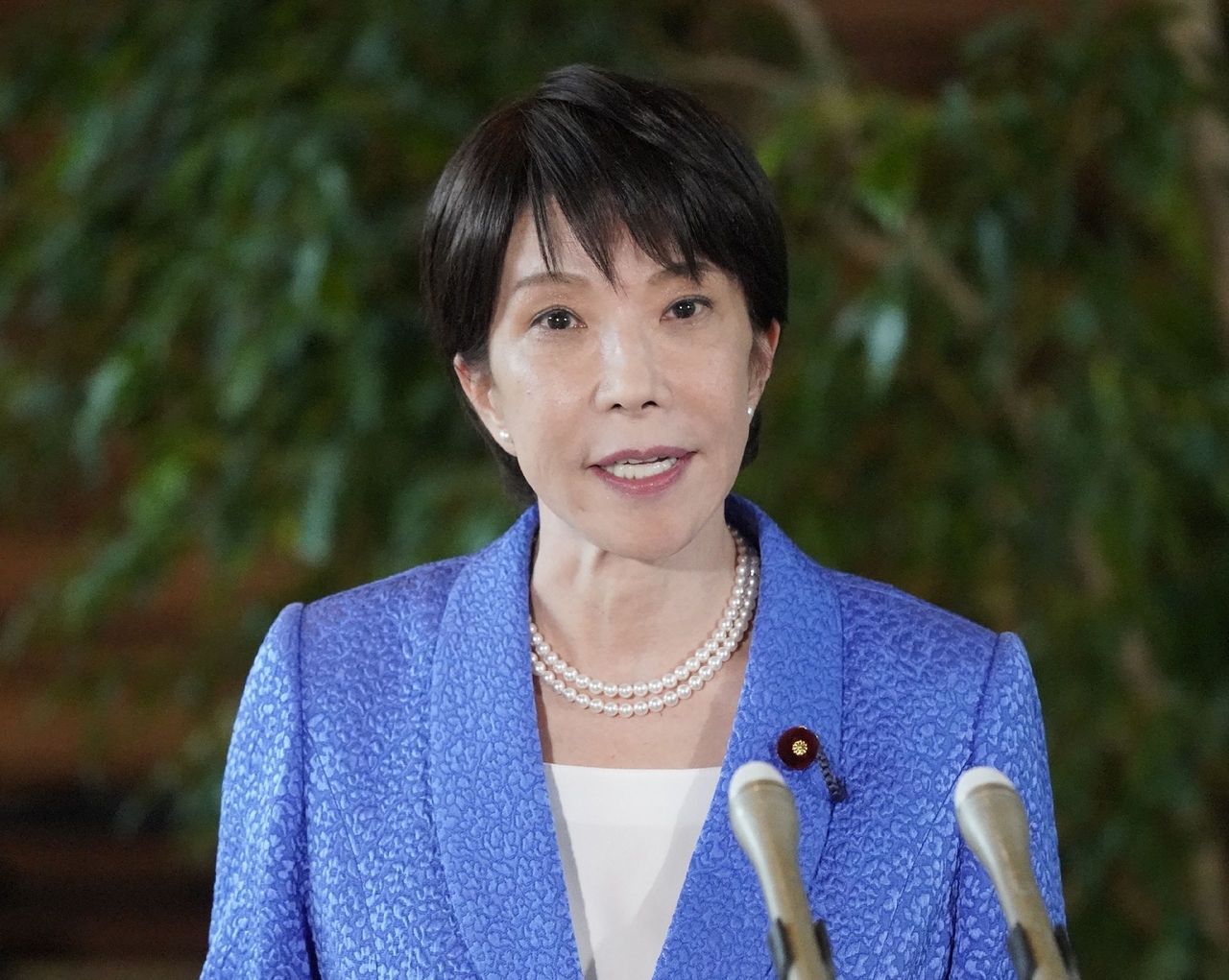
TOKYO (Reuters) -- Japanese Prime Minister Sanae Takaichi on Thursday retained key ministers in a Cabinet reshuffle that seeks to shore up political support to push through her flagship spending plans amid jittery financial markets.
In her first reshuffle since taking office last October, Takaichi kept Satsuki Katayama as finance minister, a move that provides continuity in Japan's exchange-rate policy.
Katayama played a key role in negotiating with US Treasury Secretary Scott Bessent on a rare joint US-Japan yen intervention in late July, an effort that underscored the countries' close cooperation.
The reappointment of Katayama, a former Finance Ministry bureaucrat regarded as having a conservative stance toward fiscal policy, is likely to be welcomed by bond markets wary of Takaichi's plans to increase government spending, which in turn could boost debt issuance, analysts say.
In a sign that she has no intention of reining in her big spending plans, however, Takaichi also kept her reflationist ally Minoru Kiuchi as economy minister.
The yield on the benchmark 10-year Japanese government bond hit three-decade highs this week. Japan's public debt, at twice the size of its economy, is the largest among advanced nations.
Other key ministers, including some of her competitors in last year's race to lead the ruling party, such as Foreign Minister Toshimitsu Motegi and Defense Minister Shinjiro Koizumi, retained their posts.
Aiming to solidify cooperation with her ruling Liberal Democratic Party's coalition partner, she appointed Hiroshi Nakatsuka from the Japan Innovation Party as minister in charge of deregulation.
The new lineup was announced by Chief Cabinet Secretary Minoru Kihara, who also retained his post. Takaichi will hold a news conference at 6:30 p.m. Thursday.
Parliamentary debate over Takaichi's contentious economic policies is set to start soon, and the prime minister faces a tricky balancing act.
With households smarting from rising living costs, she risks hurting her approval ratings by backing down on her pledge to cut taxes and boost spending.
But her decision to pursue a two-year tax cut on food items sparked the bond sell-off and criticism from Bessent, putting her under pressure to heed market calls for fiscal discipline.
Takaichi's pledge to cap new government bond issuance at around $256 billion for the fiscal 2027 budget is already facing scrutiny after budget requests swelled to pandemic-era levels.
Japan also faces the prospect of higher defense spending in a strategy review this year.
The cost of funding Japan's debt is increasing as the central bank raises interest rates and slows bond purchases in an effort to wean the economy off decades of massive stimulus.
The Bank of Japan is widely expected to raise its main policy rate by 0.25 percentage points to 1.25 percent Friday.
khnews@heraldcorp.com